Services
Natural stone and marble tiling in Exeter
Marble, travertine, slate and stone, plus the porcelain lookalikes, set out so the veining and pattern sit where your eye goes first.
5.0 on Google6+ years · 350+ jobs£2m public liabilityExeter & all of Devon
What's included
Natural stone & marble.
- Marble, travertine, slate and limestone
- Marble-effect and stone-effect porcelain
- Sealing of natural stone
- Floors, walls and showers
- Feature walls
How Mark does it
The bit you don't see.
Set out
The room is set out before a tile goes down, so the veining and pattern sit where your eye goes first and the cuts land at the edges.
Fix on a sound base
Walls and floors are checked for flat, sound and stiff before the stone goes on. Some pale marbles and limestones need a white adhesive, so nothing shows through.
Seal, grout and advise
Stone is usually sealed before grouting, so the grout doesn't stain it. When it's finished, you'll be told what your stone needs to stay looking right.
Based in Exeter, Mark covers all of Devon. See more recent projects, or read what customers say.
What people worry about
The usual worries,
answered by customers.
Stone isn't cheap. Will the detail be right?
★★★★★“Extremely professional from start to finish, very precise with every detail, and left everything spotless when the job was complete. The quality of his workmanship is outstanding.”
Not sure whether to choose stone or porcelain?
★★★★★“Great service from start to finish. Good advice given throughout. Mark is cheerful and easy to have around while getting the job done promptly and with no fuss or mess.”
Will the layout look right from the door?
★★★★★“The setting out alone was worth the money. He spent half a day measuring before a single tile went down — you can see why when you stand in the doorway.”
Real reviews from Mark's customers, labelled with where each one came from.
What affects the price
Priced on what the job needs.
Every job is priced on what it actually needs. These are the things that move the number.
The stone itself
Some stone comes in tiles of uneven thickness (uncalibrated), which take longer to bed flat. Large or heavy pieces take more handling.
Sealing
Most natural stone is sealed before grouting, so the grout doesn't stain it, and often again once it's grouted. Porcelain lookalikes don't need it.
Edges and corners
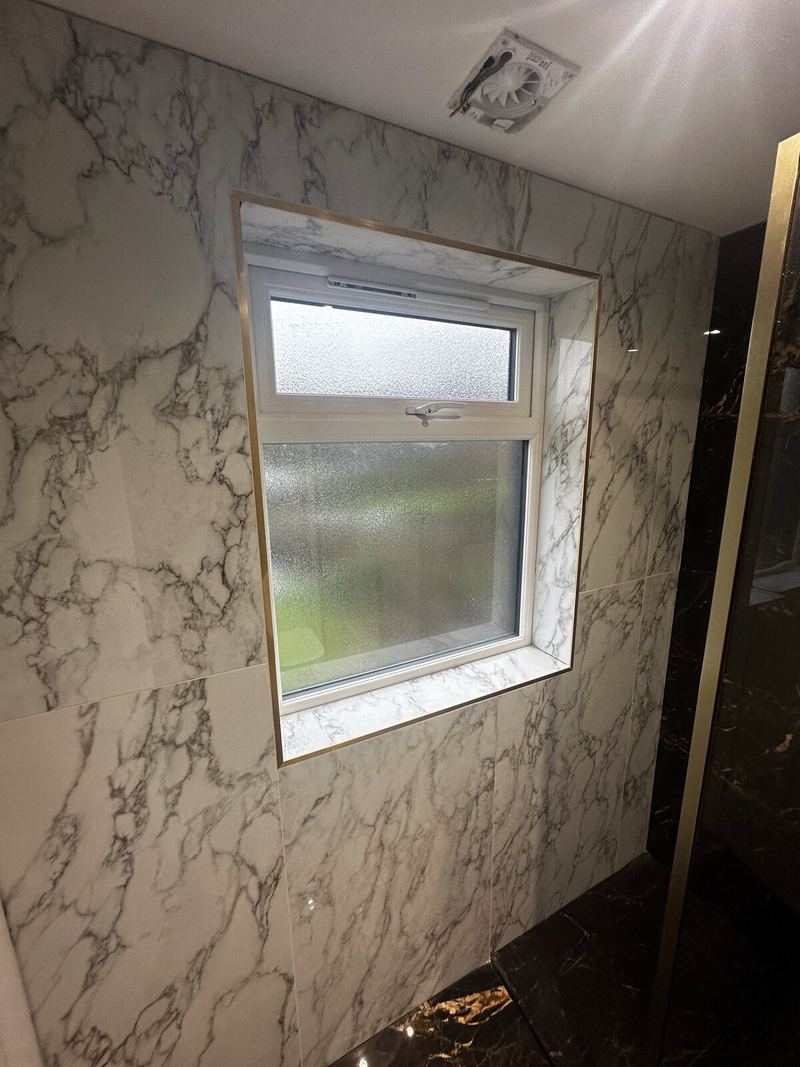
How exposed edges, window reveals and external corners are finished changes the cutting time. A trim is quicker than a shaped or polished edge.
The surface underneath
Stone is heavier than most porcelain and less forgiving of movement, so the wall or floor has to be strong, flat and stiff.
Pattern and veining
Mixed-size layouts, such as the modular (Versailles) pattern often used for travertine, and matching veining across a wall, take longer to set out.
Prices aren't published here, because no two rooms need the same work. Mark quotes each job on what it involves.
Lookalikes
Stone-effect porcelain
Most tiles sold in the UK are ceramic or porcelain, and a lot of them now look like marble, limestone, travertine or slate. Porcelain lookalikes are harder-wearing, need no sealing and are consistent from box to box.
The setting out is the same either way. Veining still has to run the right way across a wall, and a printed pattern shows if two identical tiles land side by side, so tiles from several boxes are best mixed before they go up.
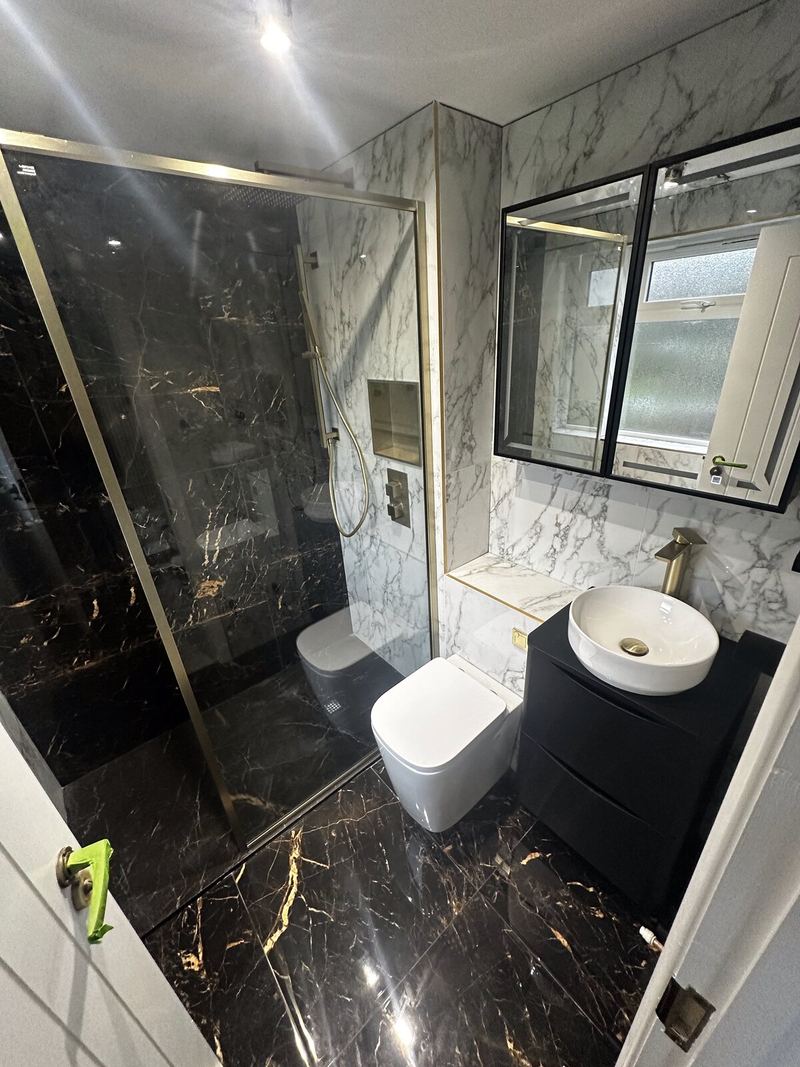
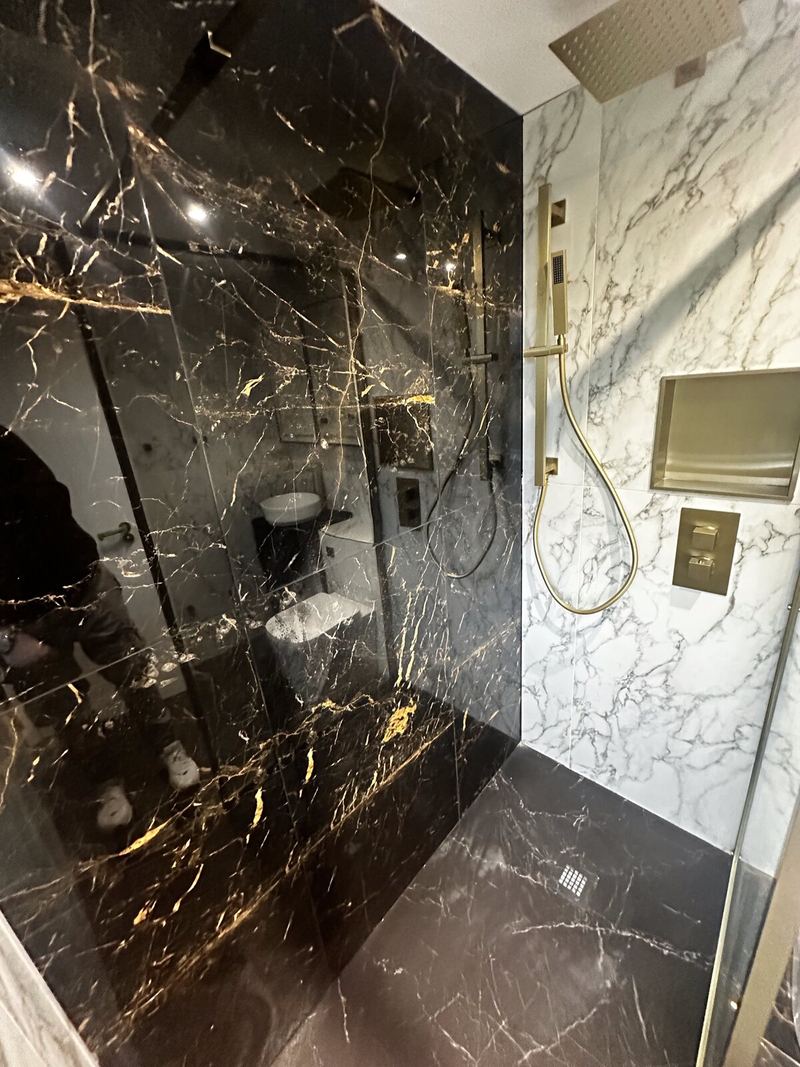
Marble-effect porcelain comes in large-format tiles and panels too, which keeps grout lines to a minimum. See the black and gold marble-effect ensuite and large-format tiling.
Aftercare
Looking after natural stone
Stone wears well for decades if it's looked after. Clean it with a pH-neutral stone cleaner, wipe up acidic spills such as lemon juice or wine quickly, and reseal when water stops beading on the surface.
Grout on a stone floor or in a stone shower can be raked out and renewed without lifting the stone, as long as the tiles are sound.
Recent work
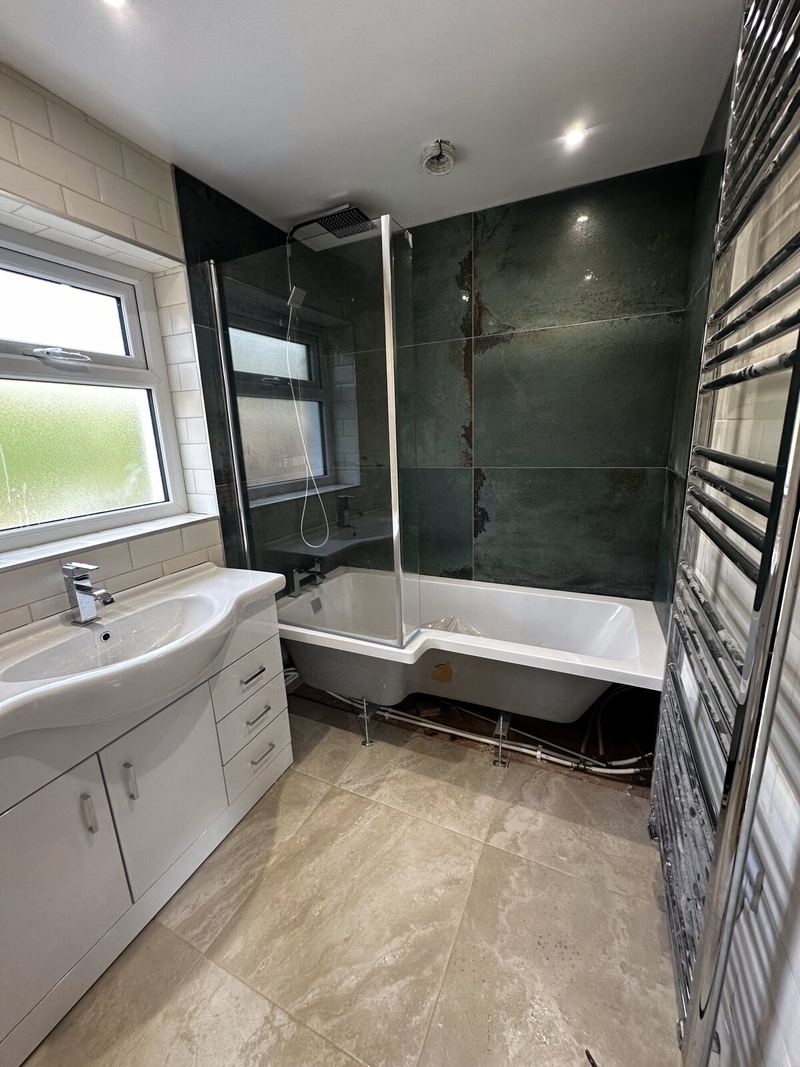
Mark's recent jobs.
Case studies
See one start to finish.
Natural stone tiling questions
Natural stone questions, answered
Can't see your question? Call or WhatsApp Mark and ask. He'll give you a straight answer.
Call 07856 584175Does natural stone need sealing?
Usually, yes. Most natural stone is porous, so it's sealed before grouting and resealed from time to time, depending on the stone and how much use it gets. A simple test: drip some water on it. If it darkens quickly, it's time to reseal.
Should I choose natural stone or porcelain?
Porcelain is tougher, needs no sealing and is more consistent from tile to tile. Natural stone has a depth and variation porcelain can't fully copy, and it can be re-honed (ground back to a smooth finish) or repaired in place. It comes down to the look you want and how much care you're happy to give it.
Is travertine all right in a shower?
Yes, if it's filled (the natural holes filled at the factory), sealed, and resealed when it needs it. It's softer than porcelain and sensitive to acidic cleaners, so it suits someone happy to look after it.
How should I clean marble and other natural stone?
With a pH-neutral cleaner made for stone. Vinegar, lemon, bleach and most limescale removers etch marble, limestone and travertine, leaving dull patches that won't wipe off.
Is slate slippery?
Riven slate (split, with a natural textured surface) has good grip. Honed slate is smoother, so check its slip rating before using it on a bathroom floor.
Does stone-effect porcelain look real?
The better ones come close, especially in larger sizes, where the printed pattern repeats less often. Look at several tiles together rather than one sample, to see how often the pattern repeats.
Other services
More tiling services.
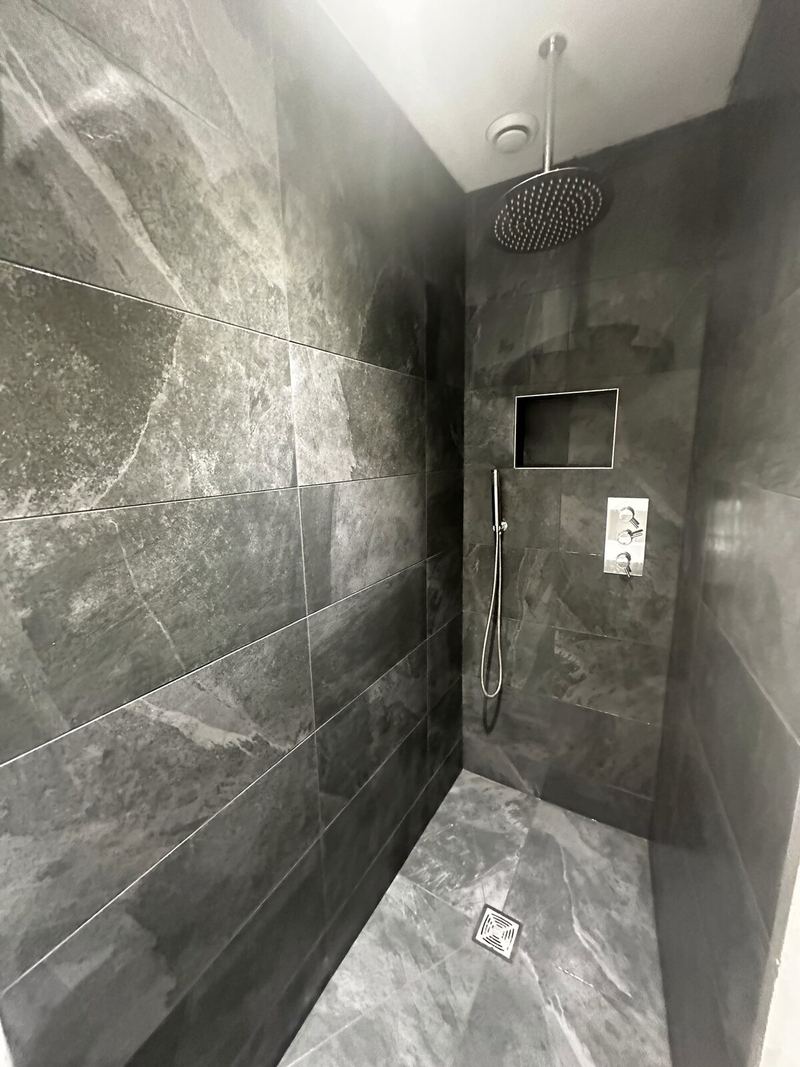
Wet rooms
More about wet room tiling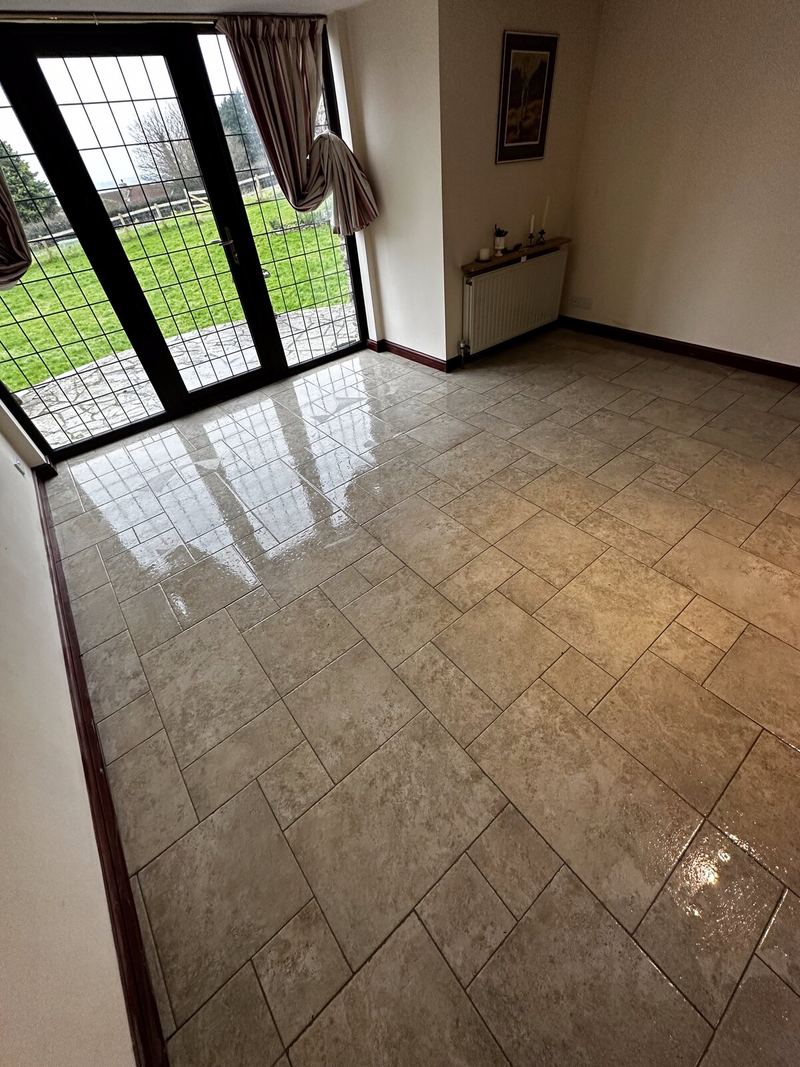
Floor tiling
More about floor tiling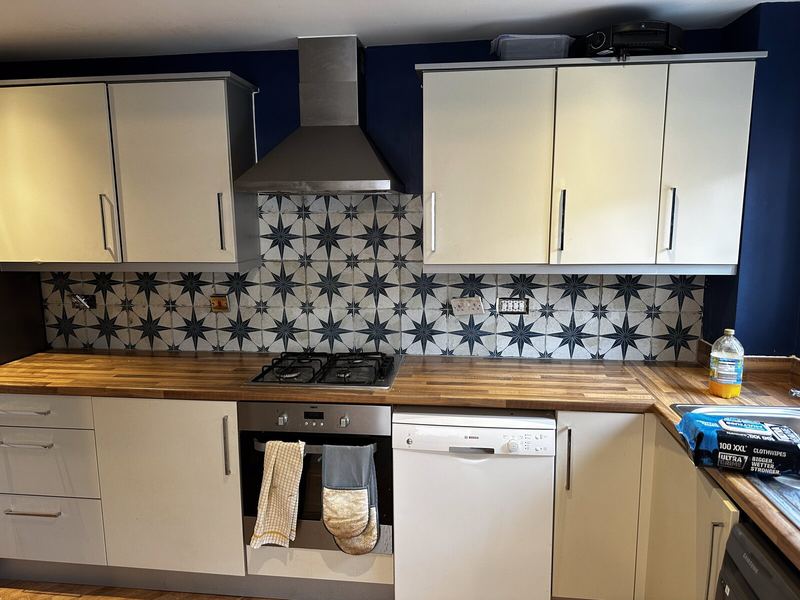
Kitchen tiling
More about kitchen tiling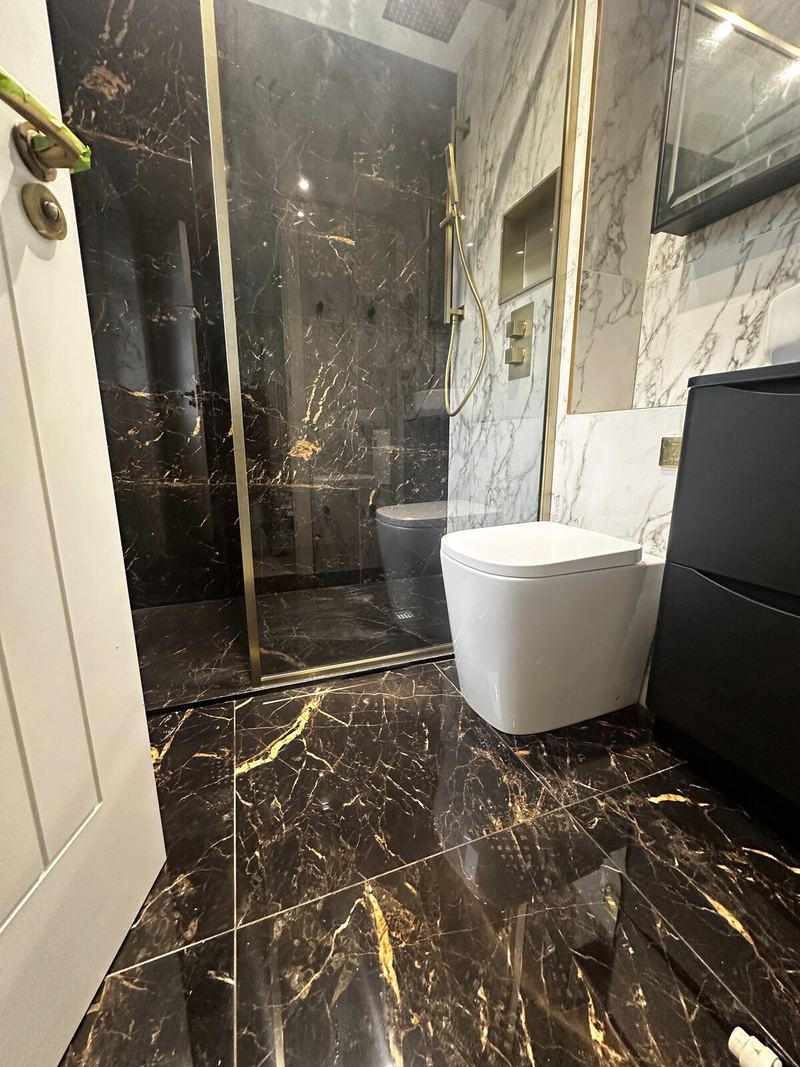
Large-format slabs
More about large-format tilingCommercial tiling
More about commercial tiling
Regrouting & repairs
More about regrouting & tile repairsPlanning some tiling?
Send a few photos and rough sizes. Mark will come back to you with a written, itemised quote. Based in Exeter, working all over Devon.