Large-format specialist
Large-format porcelain and slab tiling in Devon
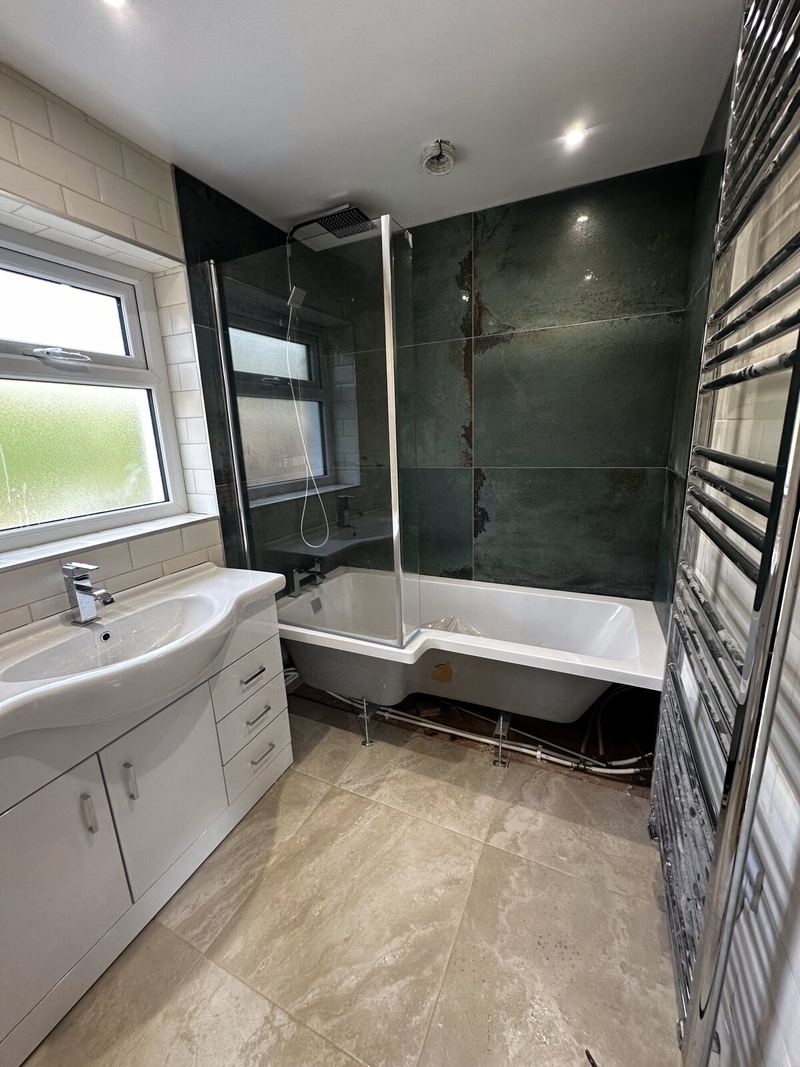
Large-format porcelain tiles and panels for bathrooms, shower walls and open-plan floors, with fewer joints and cleaner lines. Mark fits porcelain slabs up to 2.8 × 1.2 m, and is one of only a handful of tilers in Devon who do, working alongside the two specialists who trained him.
5.0 on Google6+ years · 350+ jobs£2m public liabilityExeter & all of Devon
What Mark fits
Large format, by the numbers.
- Largest size
- Porcelain slab tiles up to 2.8 × 1.2 m
- Who fits them
- Mark, working alongside the two specialists who trained him
- Based
- Exeter, working across Devon
- Insurance
- £2m public liability
To scale
How big is 2.8 × 1.2 m?
Sizes
What counts as large format, and what's a slab
In the trade, large format usually means any tile with a side of 60 cm or more: 600 × 600 mm, 1200 × 600 mm, 1200 × 1200 mm. They're common on bathroom walls and open-plan floors.
Slabs go further. Sold as porcelain panels or slab tiles, they come in sizes such as 2400 × 1200 mm and 2800 × 1200 mm, some only a few millimetres thick. A single 2.8 × 1.2 m slab covers 3.36 m², enough for many shower walls in one piece.
Many panels are marble-effect or stone-effect porcelain. For real marble and stone, see natural stone tiling.
Outdoor porcelain paving is sold as slabs too. Everything on this page is about indoor walls and floors.
The difference
Why slabs are different to fit
Flatness. The bigger the tile, the less a wall or floor can be out. A small tile rides over a slight hollow; a 2.8 m slab bridges it, and either rocks or cracks. A slab needs a dead-flat surface, so that comes first.
Full adhesive coverage. Slab makers' installation guidance generally calls for adhesive on both the wall and the back of the slab, pressed out so there are no hollow spots. A void behind a slab is where it cracks when something knocks it.
Handling. Large slabs flex if they're carried flat, so they're moved on edge, on a frame, with suction lifters and more than one pair of hands. The biggest take a team.
Cutting. A shower valve, a socket or a niche means cutting a hole in one very large piece. Each cut is planned before it's made, because a mistake costs the whole slab, not one tile.
The maker's instructions. Each slab maker publishes installation guidance for its panels: the adhesive, the surface underneath, joint widths and movement joints. It's written for that product, and it's the rulebook for the job.
Where they work
Shower walls, small bathrooms and 1200 × 600
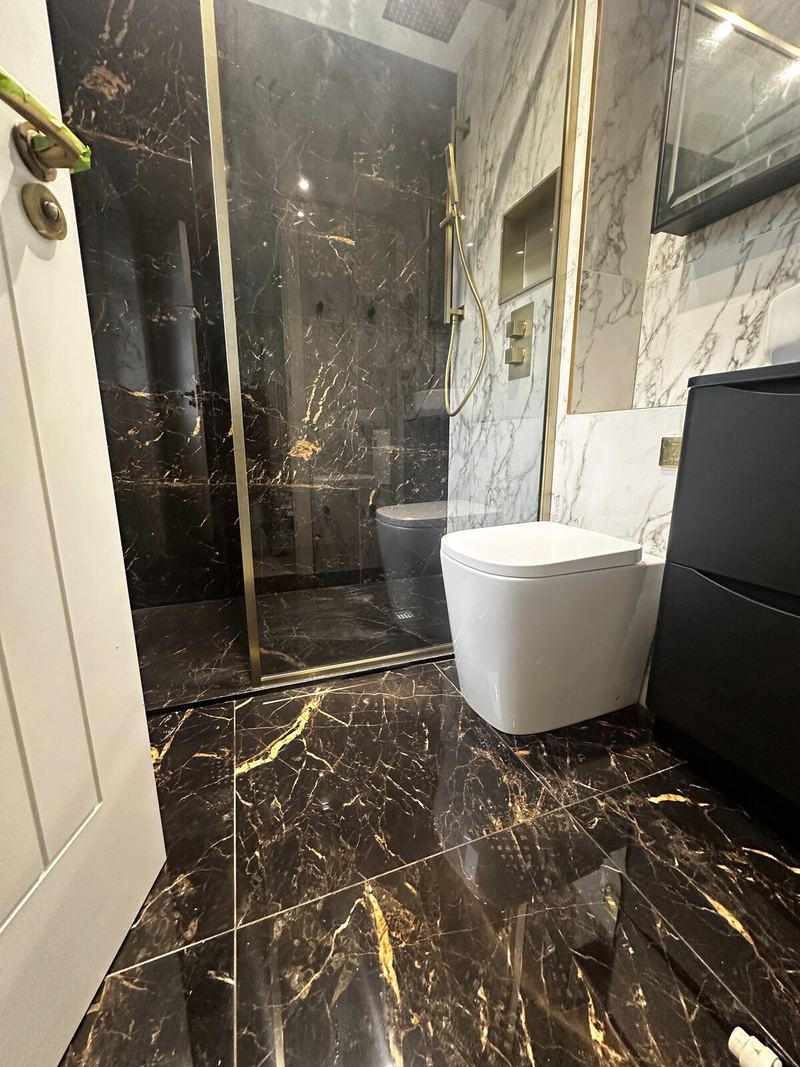
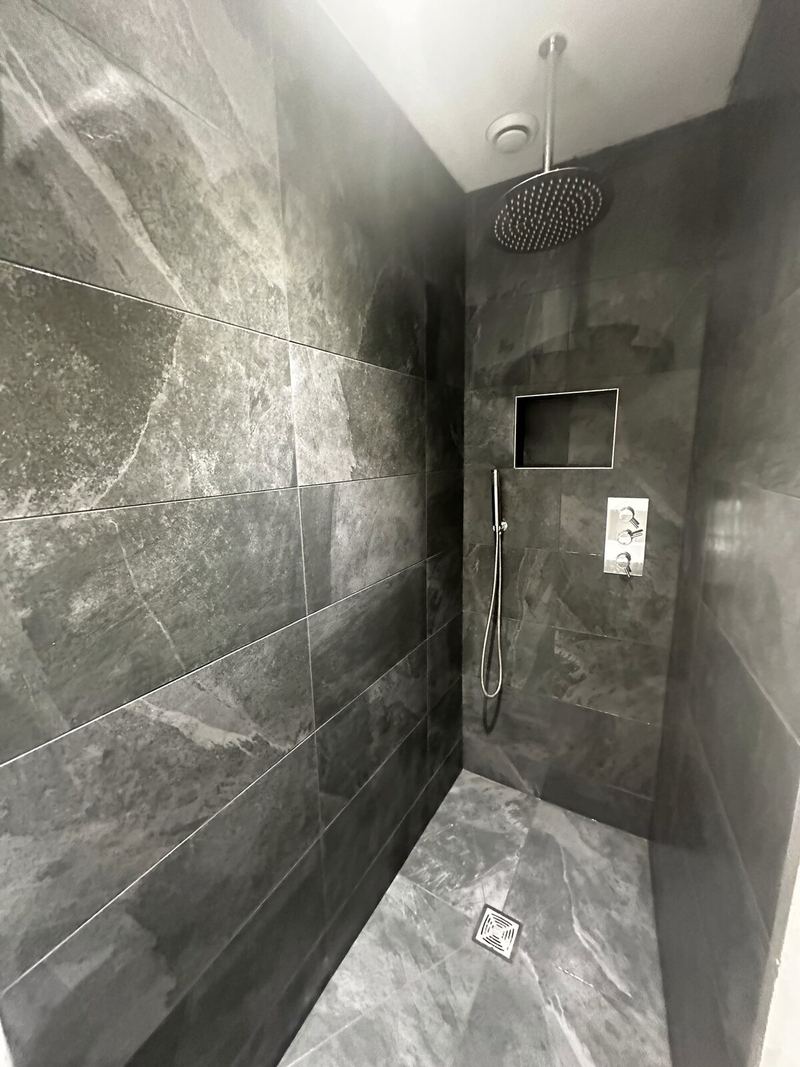
Shower walls. Large-format porcelain panels suit shower walls because there's so little grout to clean, and one panel per wall is often possible. The panel isn't the waterproofing, though: the wall behind is still tanked (sealed with a waterproof membrane system) first.
Small bathrooms. Large tiles often suit small rooms. Fewer joints make the walls read as one surface, so the room looks calmer. The catch is cutting: in a tight room full of corners, 1200 × 600 mm tiles can give much the same look with less waste and easier handling than full slabs.
1200 × 600 mm. The most common large-format size. Long tiles are rarely perfectly flat along their length, so they're usually laid with each row offset by no more than a third of a tile, rather than in a half-brick bond, to avoid lippage (tile edges sitting proud of each other).
2400 mm panels. A 2400 × 1200 mm panel runs floor to ceiling in many rooms, so a whole wall can have no horizontal joints at all. It needs the same preparation and handling as the biggest slabs.
The team
Who fits the slabs
Mark fits porcelain slabs up to 2.8 × 1.2 m, and is one of only a handful of tilers in Devon who do, working alongside the two specialists who trained him. On the largest slabs there are more hands on the job, because there have to be.
For most other jobs, Mark works on his own, so the person who quotes is the person who tiles.
Before anything is ordered
Can a 2.8 m slab get into your house?
- Doorways. On its edge, a 1.2 m wide slab passes through a standard door. The trouble is either side: there has to be room to line a 2.8 m length up straight with the opening.
- Corners and turns. Every turn on the route, from the front door to the room, has to let a 2.8 m length swing round. Narrow hallways and landings are the usual pinch points.
- Stairs. A straight flight is often workable. A winding stair, a tight half-landing or low headroom at the top may not be. Measure the stairwell, not just the stairs.
- Windows and patio doors. If the route inside doesn't work, a slab can sometimes come in through a large window or patio door instead.
- Parking and unloading. Slabs arrive crated or on a frame and need unloading close to the house. A long carry from the road, steps or a steep drive add time and risk.
- Space to cut. A slab has to be laid flat or stood on a frame to be cut, so there needs to be a clear area in the room, a garage or outside.
- Standing it up. A slab for a wall is lifted upright in the room, so ceiling height, sloping ceilings and light fittings matter.
- If it won't fit. The same look can usually be had with two smaller panels and one carefully placed joint, or by choosing 2400 × 1200 mm instead of 2800 × 1200 mm.
Case studies
Large format, start to finish.
Large-format questions
Large format,
answered.
Can't see your question? Call or WhatsApp Mark and ask. He'll give you a straight answer.
Call 07856 584175What size counts as large format?
In the trade, large format usually means any tile with a side of 60 cm or more, so 600 × 600 mm and 1200 × 600 mm both count. Panels and slabs are larger still. Mark fits porcelain slab tiles up to 2.8 × 1.2 m.
Can large-format porcelain panels go on shower walls?
Yes, and it's one of the best uses for them: one or two panels per wall means very little grout to clean. The wall behind is tanked first, because the panel isn't the waterproofing, and the cut-outs for the shower valve and any niche are planned before a cut is made.
Do large-format tiles work in a small bathroom?
Usually, yes. Fewer joints make a small room look calmer. The cuts need planning so you don't end up with thin slivers in the corners, and in a tight room 1200 × 600 mm tiles can be easier to handle than full slabs.
Is 1200 × 600 mm large format?
Yes. It's the most common large-format size. Long tiles like these are usually laid with each row offset by no more than a third of a tile, because a slight bow along their length would show as lippage in a half-brick bond.
Can you fit 2400 mm porcelain panels?
Yes. Mark fits porcelain slab tiles up to 2.8 × 1.2 m, so 2400 × 1200 mm panels are within range. In many rooms a 2400 mm panel runs floor to ceiling, so the wall has no horizontal joints.
Can large-format tiles go on floors?
Yes. Large-format porcelain floors suit kitchens and open-plan spaces, where fewer joints let the floor run through without interruption. The floor has to be properly level first, because a big tile shows every hump. See floor tiling.
Why does large-format tiling cost more to fit?
The surface has to be flatter, there's more preparation, every cut matters more, and the biggest slabs need a team and lifting equipment to move and set. It's slower, more careful work.
Will a slab fit into my house?
Often, but check before you order. A 2.8 m slab has to get through every door, round every corner and up any stairs on the way to the room. The checklist on this page covers what to measure.
For designers, showrooms and builders
Specifying slabs?
Call Mark to talk through sizes, substrates and access before the slabs are ordered.
Other services
More tiling services.
Wet rooms
More about wet room tiling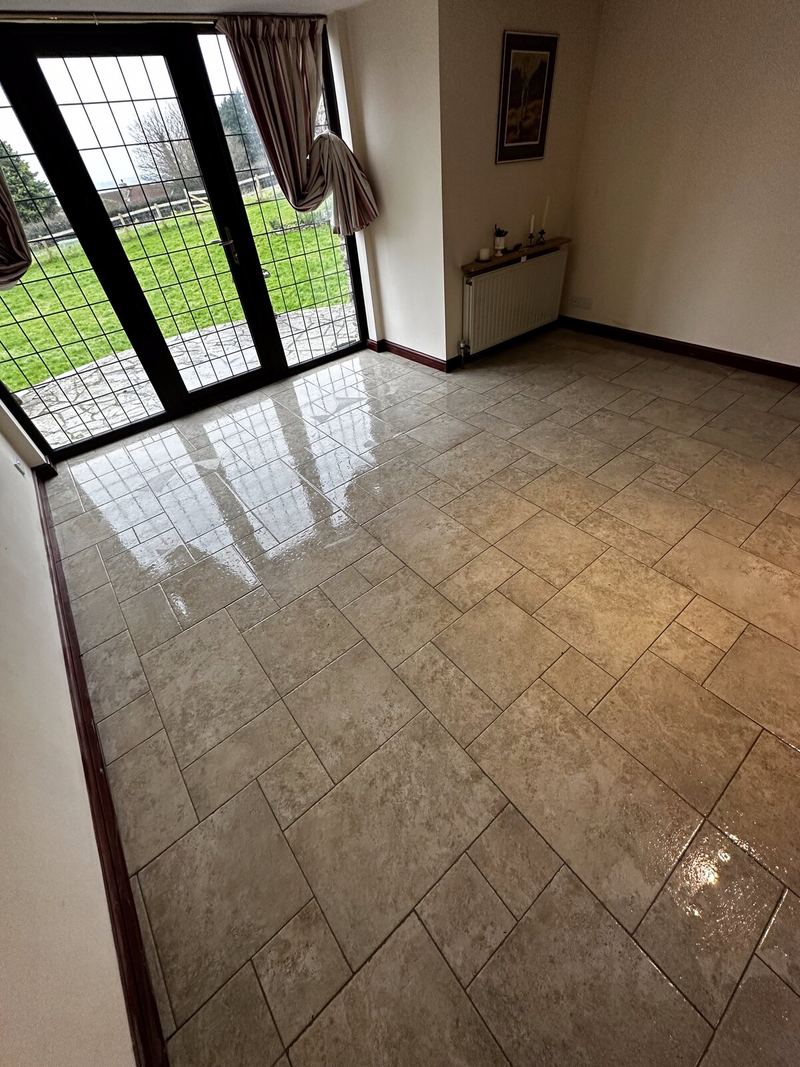
Floor tiling
More about floor tiling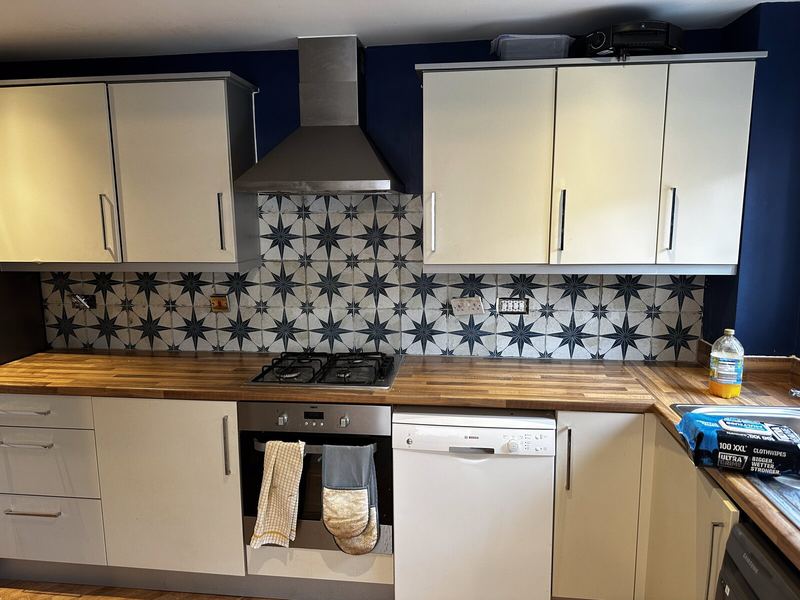
Kitchen tiling
More about kitchen tiling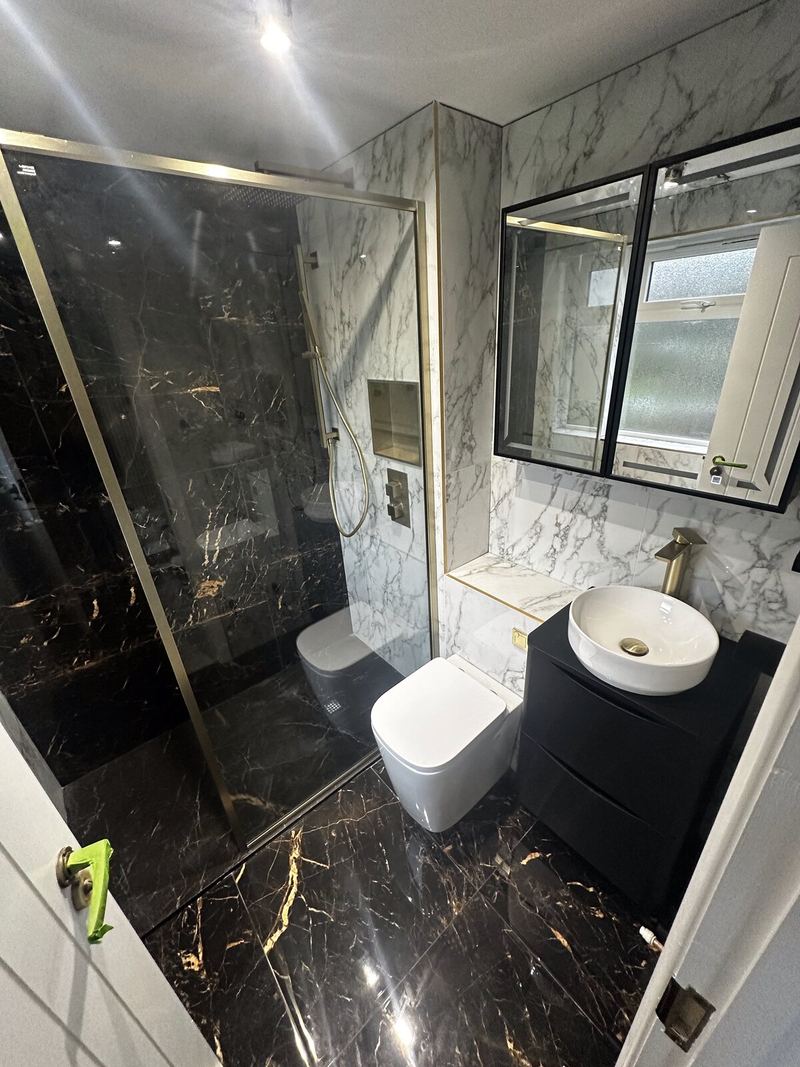
Natural stone & marble
More about natural stone tilingCommercial tiling
More about commercial tiling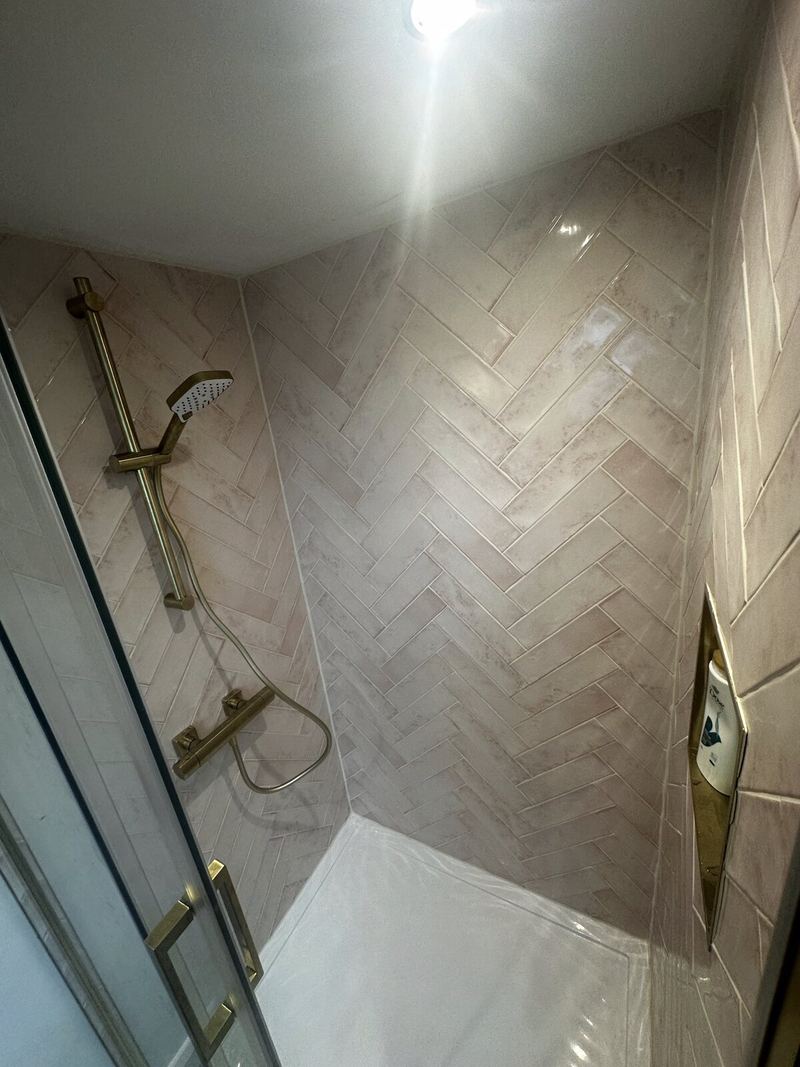
Regrouting & repairs
More about regrouting & tile repairsPlanning some tiling?
Send a few photos and rough sizes. Mark will come back to you with a written, itemised quote. Based in Exeter, working all over Devon.