Services
Floor tiling in Exeter
Kitchens, hallways, living rooms and open-plan spaces. Floors are levelled first, then set out so the cuts land at the edges where you won't see them.
5.0 on Google6+ years · 350+ jobs£2m public liabilityExeter & all of Devon
What's included
Floor tiling.
- Kitchen, hallway and living room floors
- Open-plan and through-room layouts
- Levelling before tiling
- Brick bond, straight lay, herringbone and patterned floors
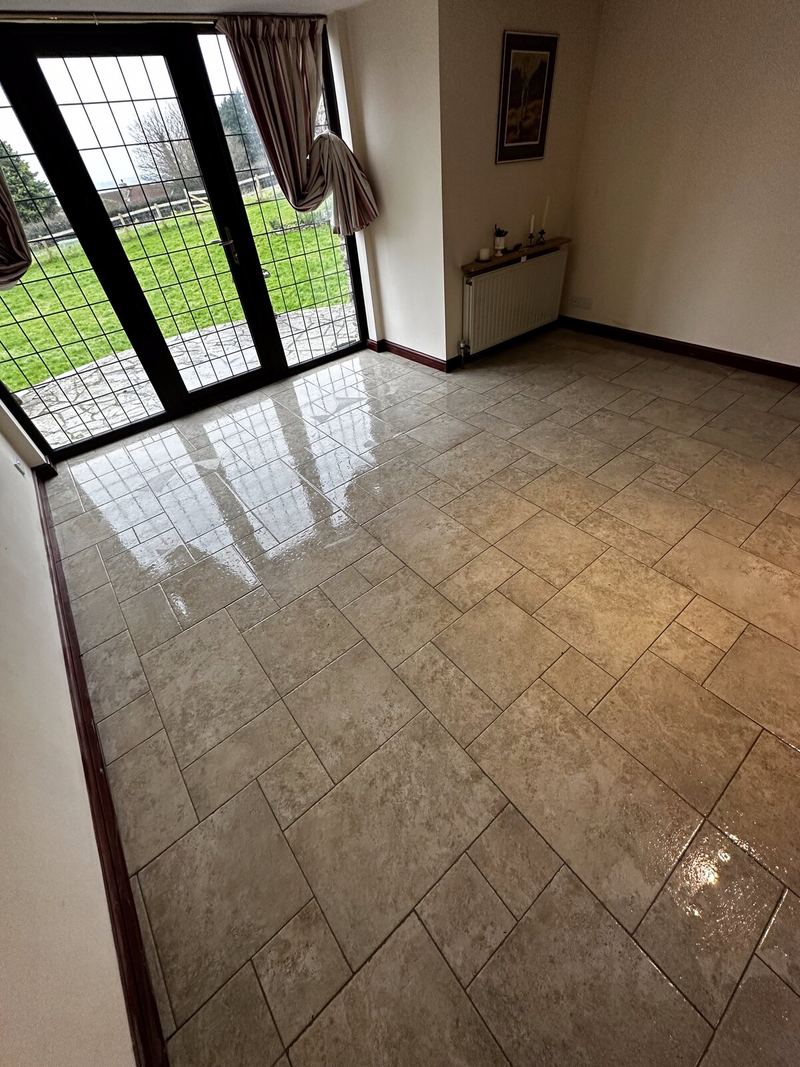
- Large-format porcelain floors
- Thresholds and trims finished neatly
How Mark does it
The bit you don't see.
Check what's underneath
The floor is checked for level, for movement and for anything loose. Timber floors are checked for bounce, because a floor that flexes will crack tiles.
Level
Uneven floors are levelled first. It's what stops lippage (tile edges sitting proud of each other) and cracked tiles later.
Set out from the doorway
The layout is planned from the doorway and the room's main lines, so the pattern looks straight from where you'll stand and the narrow cuts end up under units and at the edges.
Lay, grout and finish
Tiles are laid from the setting-out lines, grouted, and finished neatly at thresholds and edges. The room is cleared up at the end of every day.
Based in Exeter, Mark covers all of Devon. See more recent projects, or read what customers say.
What people worry about
The usual worries,
answered by customers.
Will the pattern look straight from the doorway?
★★★★★“The setting out alone was worth the money. He spent half a day measuring before a single tile went down — you can see why when you stand in the doorway.”
What if the last floor was laid badly?
★★★★★“Came to fix another firm's work and ended up redoing the whole floor ahead of schedule. Straight-talking, fair price, flawless finish.”
Will the house be left in a mess?
★★★★★“Extremely professional from start to finish, very precise with every detail, and left everything spotless when the job was complete. The quality of his workmanship is outstanding.”
Real reviews from Mark's customers, labelled with where each one came from.
What affects the price
Priced on what the job needs.
Every job is priced on what it actually needs. These are the things that move the number.
Floor area and shape
A square room is quicker per square metre than an L-shaped one, or a floor that runs through several doorways.
Levelling
Most floors have dips and humps. How far out yours is decides how much levelling goes down before the tiles.
What's underneath
Concrete and screed are usually ready to tile once they're sound and level. Timber floors flex, so they're normally overboarded (covered with a stiff layer of board) first to stop the movement cracking tiles and grout.
Lifting the old floor
Old tiles, vinyl, carpet grippers and old adhesive all have to come up before the new floor goes down. Tiles stuck firmly to concrete take the longest.
Tile size and pattern
Straight lay and brick bond are quickest. Herringbone, patterned tiles and large-format porcelain all take longer to set out, cut and lay.
Doorways and thresholds
Every doorway needs a neat finish where the tiles meet the next floor, and door linings are usually trimmed so the tiles slide underneath. Doors may need shortening once the floor is higher.
Prices aren't published here, because no two rooms need the same work. Mark quotes each job on what it involves.
Hallways
Hallway floors
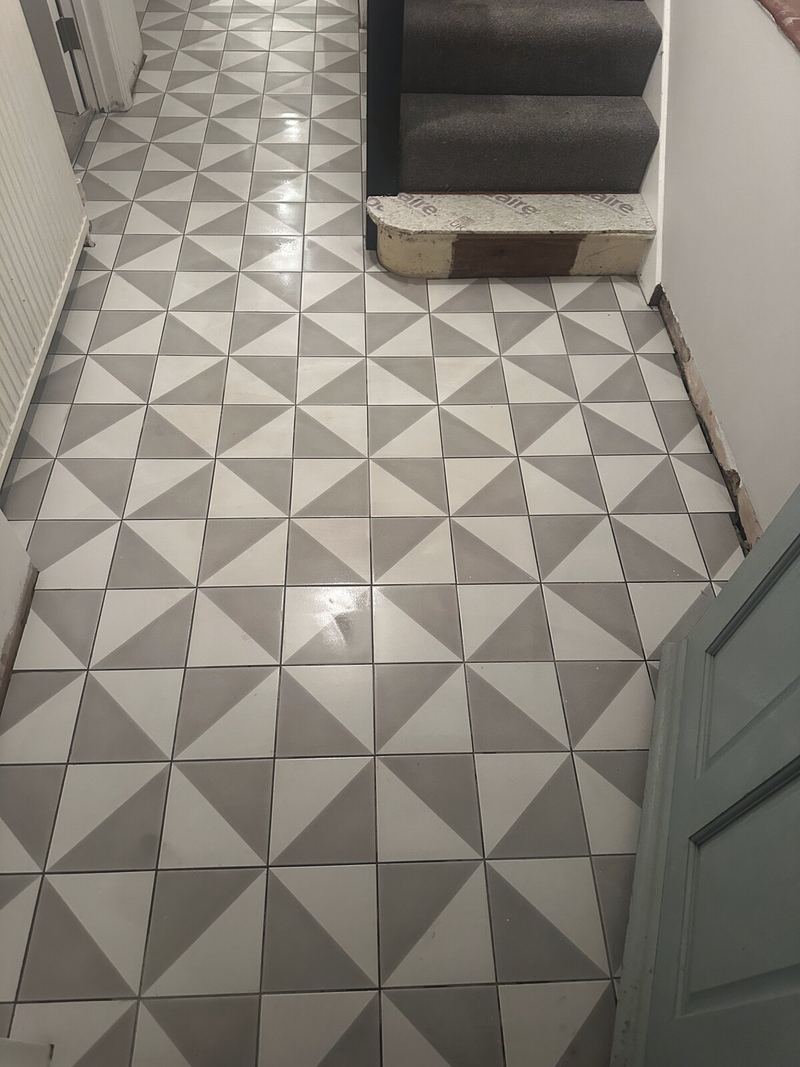
A hallway is long, narrow and the first floor anyone sees, so any drift in the pattern shows from the front door. Patterned and geometric floors are set out from the front door and the line of the hall, so the design runs true down its length and the cuts land at the skirting.
Mark tiled a grey and white geometric hallway floor in Totnes.
Hallways also take the most wear and the most wet shoes. Porcelain is the hard-wearing choice; natural stone such as slate or limestone works too, if it's sealed and looked after.
Recent work
Mark's recent jobs.
Case studies
See one start to finish.
Floor tiling questions
Floor tiling questions, answered
Can't see your question? Call or WhatsApp Mark and ask. He'll give you a straight answer.
Call 07856 584175Does my floor need levelling first?
Often, yes. Most floors have dips and humps you can't see until a straight edge goes down. Levelling first is what gives a flat finish without lippage, and it matters more the bigger the tile.
Can you tile over a wooden floor?
Usually, once it's made stiff enough. Floorboards and chipboard flex as you walk on them, and tiles laid straight onto them crack. The usual answer is to screw the boards down and overboard with tile backer board or plywood first. Mark will tell you what your floor needs.
Can you tile over old floor tiles?
Sometimes. If the old tiles are flat and firmly stuck, and the extra height won't cause trouble at doors and thresholds, tiling over can work. Loose or hollow tiles have to come up, because the new floor is only as sound as the old one.
Which pattern suits my room?
Straight lay and brick bond are calm and work almost anywhere. Herringbone and patterned tiles make more of a statement and suit hallways and feature floors. Large-format porcelain suits open-plan spaces, where fewer joints let the floor run through. Mark can talk you through what will look right in your space.
How soon can I walk on a new tiled floor?
Usually the next day for light foot traffic, depending on the adhesive and grout used. You'll be told on the day when the floor can be used, and when heavy furniture can go back.
Can you replace a few cracked floor tiles?
Usually, if spares or a close match can be found. If the cracks run in a line across several tiles, the floor underneath is probably moving, and that needs sorting first. See regrouting and repairs.
Other services
More tiling services.
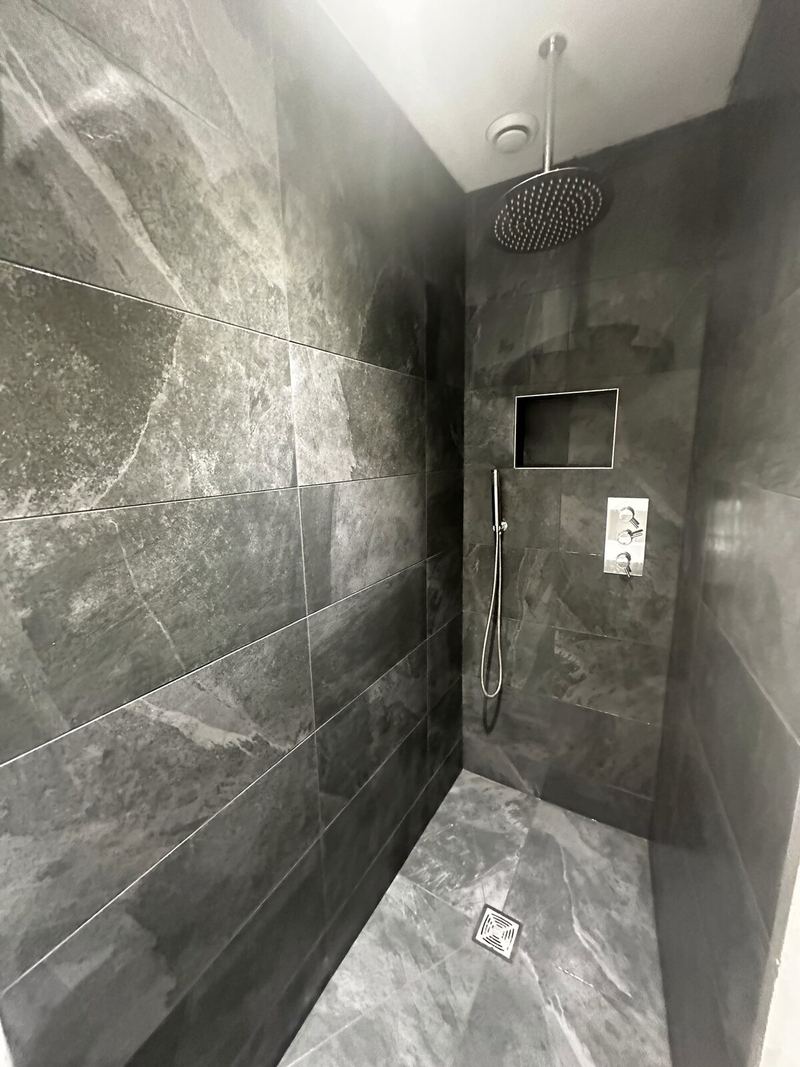
Wet rooms
More about wet room tiling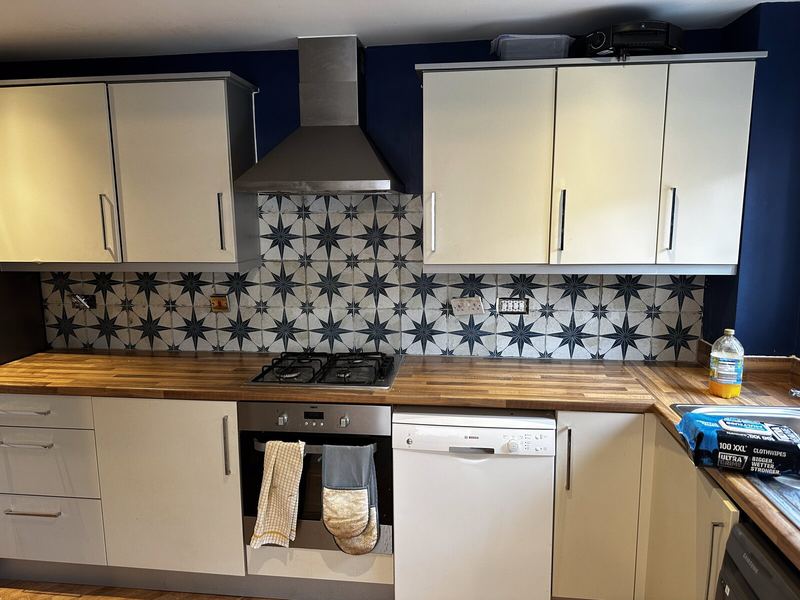
Kitchen tiling
More about kitchen tilingLarge-format slabs
More about large-format tiling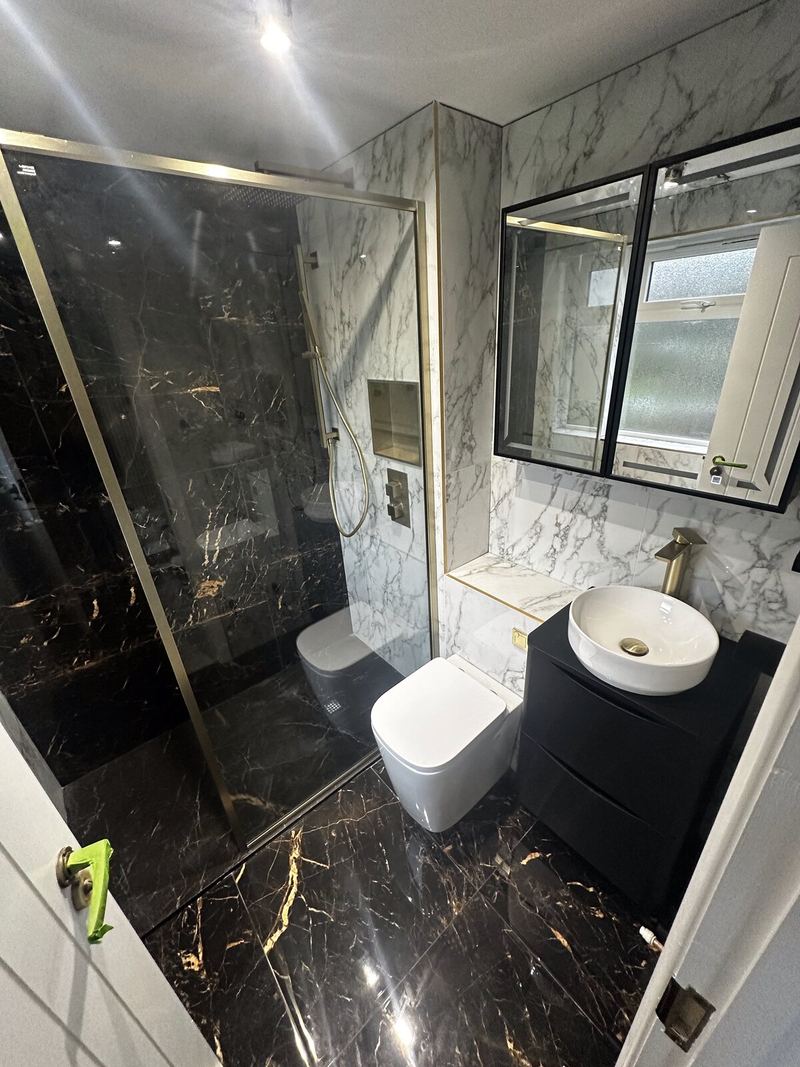
Natural stone & marble
More about natural stone tilingCommercial tiling
More about commercial tiling
Regrouting & repairs
More about regrouting & tile repairsPlanning some tiling?
Send a few photos and rough sizes. Mark will come back to you with a written, itemised quote. Based in Exeter, working all over Devon.